EN590 10PPM FOB Fuel Offer From USA to Rotterdam and Houston Ports

Reliable diesel supply starts with clear terms. In bulk fuel trading, the price is only one part of the offer. Buyers also need to know the lift volume, port position, inspection process, payment route, proof of product, and how title transfers after injection.
This EN590 10PPM FOB fuel offer is structured for qualified buyers seeking large-volume diesel supply with FOB procedures through Rotterdam and Houston port channels. The offer is presented by Nationwide Brokerage Group Inc, positioned as a Tier 1 fuel source for buyers seeking a direct, document-led transaction process.

Current EN590 10PPM FOB offer summary
EN590 10 PPM is a low-sulfur diesel specification commonly used across international fuel markets. The “10 PPM” reference relates to sulfur content, making specification documents and third-party inspection especially important in any transaction.
The current commercial indication is outlined below.
Offer item | Details |
Product | EN590 10PPM diesel |
Price per metric ton | $750 / $740 per MT |
Trial lift | 100,000 MT |
Minimum lift | 100,000 MT |
Maximum lift | 500,000 MT |
Origin | USA |
Listed delivery ports | Vladivostok, Rotterdam, and Houston ports |
Main FOB procedure | Rotterdam / Houston |
Incoterms | FOB |
Payment terms | T/T wire transfer and MT103 |
Inspection | SGS |
Buy-side commission | $5 per MT |
Seller representation | Nationwide Brokerage Group Inc |
The commercial terms point to a transaction designed for serious fuel buyers with storage capacity, bank readiness, and the ability to follow an established FOB working procedure.
Because fuel markets move quickly, final pricing, vessel timing, tank availability, and documentation should be reconfirmed at the time of ICPO submission. This post is informational and does not replace legal, commercial, or compliance review.
What EN590 10PPM means for buyers
EN590 diesel is a European standard for automotive diesel fuel. Buyers sourcing EN590 generally care about four practical issues.
The first is product quality. A Product Passport or analysis report helps confirm that the fuel aligns with the agreed specification. For EN590 10PPM, sulfur content is a key point, but buyers should also review other quality markers in the analysis.
The second is independent inspection. SGS inspection adds a recognized third-party verification step. In a FOB fuel transaction, this matters because the buyer needs confidence before dip testing, injection, and final payment.
The third is storage control. A buyer normally needs a valid Tank Storage Agreement, often called a TSA, before the seller will move deeper into the transaction. Tank readiness helps prevent delays once documents are issued.
The fourth is clear title transfer. The seller transfers title ownership only after the agreed payment step. The document trail should show product movement, injection, payment, and export documents in the correct order.
In a high-volume diesel transaction, speed matters, but document order matters more. A clean procedure protects both the buyer and seller.
FOB Rotterdam and Houston procedure at a glance
The stated working procedure is for FOB Rotterdam and Houston. FOB means Free on Board. Under FOB structures, the seller is responsible for making the product available at the agreed loading point under the contract terms, while the buyer usually takes responsibility after the product passes the agreed delivery point.
In tank-to-tank transactions, the focus often sits on storage, verification, dip test, injection, and payment. The buyer must be ready to provide documents quickly, and the seller must be ready to provide verifiable proof of product.

The offer procedure follows this general sequence.
Step | Transaction action |
1 | Buyer accepts the seller’s working procedure and issues an ICPO addressed to the end seller through the seller’s representative. |
2 | Seller issues the commercial invoice, and the buyer signs and returns it with the buyer’s Tank Storage Agreement. |
3 | Seller provides the listed PPOP documents for buyer review and verification. |
4 | Seller provides SGS report, injection report, and unconditional DTA. |
5 | NCNDA and IMFPA are signed, then buyer completes dip test and provides TSR within 24 hours after successful dip test. |
6 | Seller proceeds with tank-to-tank injection and provides the injection report. |
7 | Buyer pays through MT103 for the injected product, and seller transfers title with export documents. |
8 | After the first lift closes, seller pays intermediaries and proceeds toward contract signing with the buyer. |
This process is document-heavy because the volume is large. At a trial lift of 100,000 MT, even small misunderstandings can create costly delays. Every party should make sure names, tank details, bank details, and product references match across documents.
Key documents in the proof of product package
A valid PPOP package helps the buyer verify that the seller can perform. The exact form of each document should match the transaction and the receiving tank farm’s requirements.
Product Passport
The Product Passport is the product analysis report. It gives the buyer technical details about the diesel being offered. Buyers should compare the analysis against the agreed EN590 10 PPM specification before moving to the next step.
Authorization to Verify
The Authorization to Verify, often shortened to ATV, allows the buyer to confirm the product or related details by email or phone. This reduces uncertainty and gives the buyer a direct verification route.
Commitment Letter to Supplier
This letter supports the seller’s position in the supply chain. It shows that the seller is committed to the supply process and gives the buyer more context around the source.
Authorization to Sell and Collect
The Authorization to Sell and Collect, called ATSC, supports the seller’s right to sell the product and collect payment. Buyers should review names, company details, and product references carefully.
Tank-to-Tank Injection Agreement
The Tank-to-Tank Injection Agreement, or TTIA, must be signed by the buyer and the tank farm. This document supports the physical movement of product from seller tank to buyer tank.
How the dip test and injection stage works
The dip test is one of the most important points in the transaction. It allows the buyer or buyer’s appointed party to confirm the product in the seller’s tank before injection into the buyer’s tank.
After the seller provides the SGS report, injection report, and unconditional DTA, the buyer follows the agreed verification process. Once the dip test succeeds, the buyer provides a Tank Storage Receipt, known as TSR, within 24 hours.
That TSR confirms the buyer has storage ready to receive the product. The seller then proceeds with tank-to-tank injection and provides the buyer with the injection report showing that product moved into the buyer’s tanks.
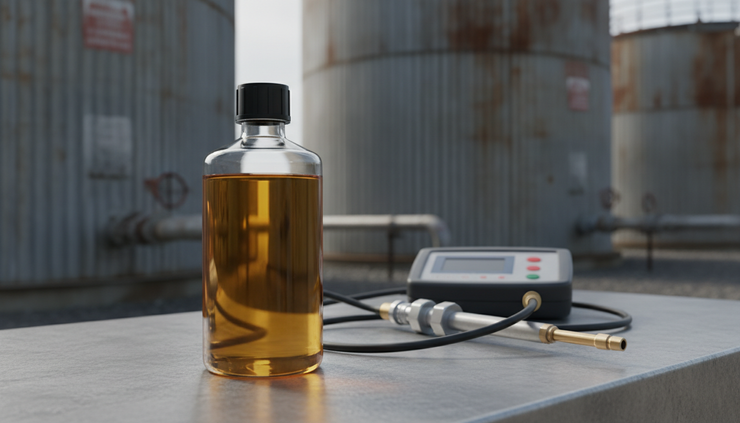
This stage protects both sides.
For the buyer, it confirms product availability before payment. For the seller, it confirms the buyer has storage and can receive the product. For intermediaries, it creates a clean record before commissions are paid after closing.
Payment and title transfer through MT103
The payment terms are T/T wire transfer and MT103. In international trade, MT103 is a SWIFT payment message that confirms a customer credit transfer instruction has been sent through the banking system.
Under the stated procedure, the buyer pays for the total cost of the product injected into the buyer’s tanks via MT103. After payment, the seller transfers title ownership to the buyer and provides the required export documents.
This order matters.
The buyer should not treat payment as separate from documentation. The commercial invoice, injection report, SGS report, title transfer documents, and export documents should tell the same story. The product, quantity, tank details, parties, port, and payment reference should align.
Buyers should also plan bank compliance early. Large fuel transactions can trigger banking review, especially when cross-border parties, large values, and commodity trading documents are involved. Banks may request supporting documents before releasing or confirming payment.
Commission terms and intermediary protection
The offer lists a buy-side commission of $5 per MT. It also states that NCNDA and IMFPA are signed during the transaction process.
NCNDA means Non-Circumvention and Non-Disclosure Agreement. IMFPA means Irrevocable Master Fee Protection Agreement. These documents protect intermediaries and define how commissions are recognized and paid.
The stated procedure says the seller pays all intermediaries involved in the transaction after the first lift concludes. It also states that the buyer pays the buyer side, and the seller pays the seller side at the same time the buyer pays the seller for fuel.
This structure gives all brokers and representatives a defined payment point. It also gives the principal parties a cleaner path to close the first lift before moving into a longer contract.
What a qualified buyer should prepare before issuing an ICPO
A buyer should not issue an ICPO until the basic readiness items are in place. A rushed ICPO can slow the transaction if storage, banking, or company documents are incomplete.
Before issuing the ICPO, the buyer should prepare:
Company registration documents
Buyer profile or corporate information sheet
Valid Tank Storage Agreement
Banking readiness for T/T wire transfer and MT103
Authorized signatory information
Clear target lift volume
Port and tank farm details
Product specification requirements
Commission and mandate details, if any
The ICPO should be addressed correctly to the end seller through the seller’s representative. It should match the requested lift volume and reference the accepted working procedure.
Small errors can cause delays. For example, if the buyer’s company name appears one way on the ICPO and another way on the TSA, the seller may request corrections before issuing the commercial invoice or PPOP.
Why the first lift matters
The first lift works as the proof point for the relationship. The stated trial lift is 100,000 MT, which is also the minimum lift. If the first transaction closes cleanly, the parties can proceed toward a supply contract.
The offer allows up to 500,000 MT, which signals room for larger volumes after performance has been proven. Even so, the first lift should receive the most attention. It sets the working rhythm for the buyer, seller, banks, tank farms, inspectors, and intermediaries.
A successful first lift usually shows that:
The buyer can provide storage and payment
The seller can provide product and documents
The tank farm can support injection
The inspection process works
Intermediary commissions can be handled under NCNDA and IMFPA
Both sides can move into contract discussions with more confidence
That is why the procedure places contract signing after the first lift closes. Performance comes before expansion.
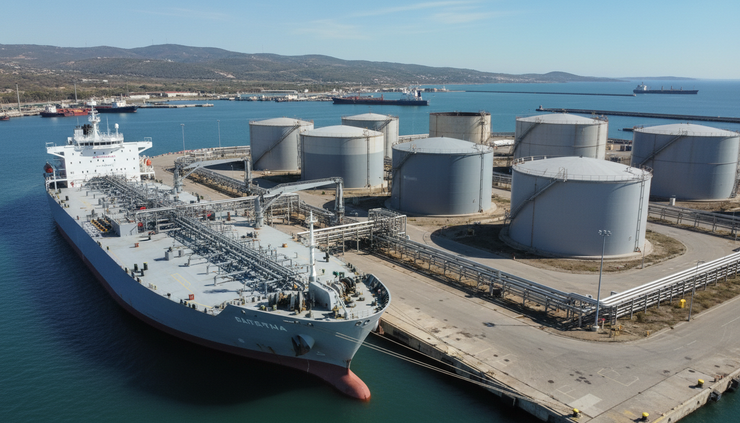
Nationwide Brokerage Group Inc as the fuel source contact
Nationwide Brokerage Group Inc presents this offer as a Tier 1 fuel source for qualified buyers seeking EN590 10PPM diesel under FOB terms. The transaction process depends on document control, buyer readiness, tank verification, SGS inspection, MT103 payment, and proper title transfer.
The key offer points are straightforward:
Core term | Current position |
Product | EN590 10 PPM |
Trial lift | 100,000 MT |
Minimum and maximum | 100,000 MT to 500,000 MT |
FOB ports | Rotterdam and Houston procedure |
Price indication | $750 / $740 per MT |
Inspection | SGS |
Payment | T/T wire transfer and MT103 |
Commission | $5 per MT buy-side |
For buyers prepared to move, the next step is to review the working procedure, confirm storage readiness, confirm bank capability, and issue a complete ICPO through the proper seller representative channel.
A clean fuel transaction does not rely on pressure. It relies on verified product, clear documents, ready tanks, and payment that follows the agreed procedure. For large-volume EN590 supply, that discipline is what turns an offer into a completed lift.


Comments