Bitumen Grade 60/70 and 80/100 CIF ASWP Price and Seller Procedure Guide

Bitumen deals can look simple on the surface: grade, price, port, payment. The real work starts when the buyer and seller must align documents, shipping terms, inspection, banking instruments, and title transfer without creating avoidable risk.
This guide organizes the supplied offer for Bitumen Grade 60/70 and 80/100 under CIF ASWP terms. It explains the headline price, the buyer-side commission, and the seller’s standard CIF working procedure in a clearer transaction sequence.
The information below is for commercial understanding only. Buyers, sellers, brokers, and mandates should confirm all terms with qualified legal, banking, shipping, and inspection professionals before signing or funding any transaction.
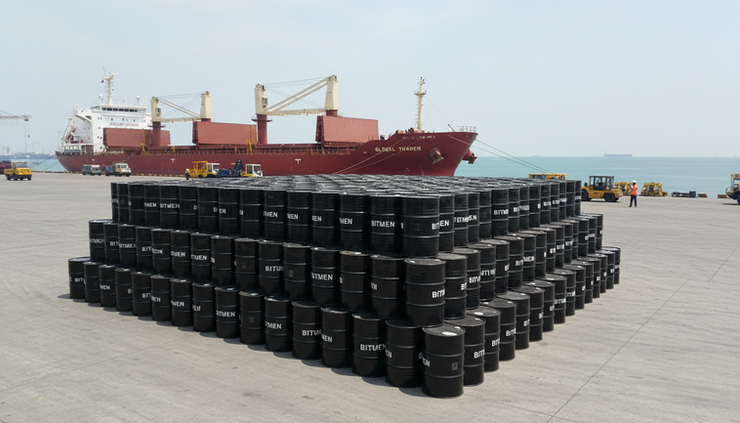
Product and price summary
The offer covers two commonly traded penetration grades of paving bitumen:
Item | Offered terms |
Product | Bitumen Grade 60/70 and Bitumen Grade 80/100 |
Incoterm | CIF |
Destination | ASWP, Any Safe World Port |
Gross price | $370 per metric ton |
Net price | $360 per metric ton |
Buy-side commission | $5 per metric ton |
Payment instrument | SBLC via MT760 or DLC via MT700 |
Performance bond | 2% in favor of buyer |
Inspection | SGS at loading port, paid by seller |
CIF means the seller is responsible for the cost, insurance, and freight to the named destination port, subject to the exact Incoterms version and contract wording used in the SPA. ASWP means “Any Safe World Port,” but the discharge port still needs to be named clearly by the buyer and accepted by the seller and shipping company.
The difference between the gross and net price usually reflects commission or commercial spread. In this offer, the stated gross price is $370 and the net price is $360, with a separate $5 buy-side commission. Every party should see the commission structure reflected in the NCNDA/IMFPA or other accepted commission protection documents before the transaction advances.
What Bitumen Grade 60/70 and 80/100 mean
Bitumen grades such as 60/70 and 80/100 refer to penetration grade. Penetration measures the hardness or softness of bitumen under controlled test conditions. The number range shows how far a standard needle penetrates the bitumen sample.
In simple commercial terms:
Grade | General character | Common use |
60/70 | Harder and less penetrable | Road construction in warmer conditions, asphalt pavement, heavy-duty surfaces |
80/100 | Softer and more penetrable | Road works in cooler conditions, flexible pavement applications |
The right grade depends on the destination climate, road design, project specifications, and local standards. A buyer should not rely on price alone. Product passport, certificate of origin, SGS report, and technical specifications should match the buyer’s project and import requirements.
The main transaction documents
A CIF bitumen transaction depends on documents. The supplied procedure lists several documents that appear at different stages of the deal. Each one has a specific commercial purpose.
The buyer typically starts with:
ICPO, or Irrevocable Corporate Purchase Order
Buyer’s company registration certificate
Signed SPA after review
Letter of acceptance for the final SPA
Confirmation letters for received documents
Bank instrument, usually SBLC or DLC
The seller typically provides:
Commitment to supply
Statement of product availability
Certificate of origin
Product passport
Export license
Product title transfer agreement
Legalized contract
Certificate of product title transfer
Commercial invoice
Proof of Product documents
SGS loading inspection report
The shipping side may include:
Charter Party Agreement
Shipping schedule
Port authority endorsement
Tank receipt
Injection report
Dip Test Authorization
The key point is sequence. No serious buyer should fund a cost or issue a banking instrument without checking whether the required document stage has been reached and whether the documents can be verified.
Step 1. Buyer issues the ICPO
The transaction begins when the buyer issues an ICPO. The ICPO should incorporate the seller’s CIF working procedure, product details, quantity, destination port, price, and payment terms.
The buyer should also attach a company registration certificate. This helps the seller confirm that the buyer is a legally registered entity and not an informal inquiry.
A strong ICPO should include:
Buyer’s full legal company name
Registration number
Product and grade
Quantity and shipment schedule
Destination discharge port
CIF ASWP reference, if applicable
Price and commission terms
Payment instrument preference
Authorized signatory details
The ICPO should match the seller procedure. If the buyer changes the procedure inside the ICPO, the seller may reject it or request amendments before issuing the SPA.
Step 2. Seller issues the Sale and Purchase Agreement
After receiving a compliant ICPO, the seller issues the Sale and Purchase Agreement, usually called the SPA.
The buyer reviews the SPA and may amend it if necessary. Under the supplied procedure, the buyer must sign and return the SPA in Word format within 3 banking days. The seller then sends the final SPA in PDF format.
After receiving the final version, the buyer confirms acceptance by issuing a letter of acceptance.
This stage matters because the SPA becomes the main contract document. It should clearly state:
Product grade and specification
Quantity and tolerance
Price per metric ton
Gross and net values
Commission terms
Delivery term
Destination port
Shipment timing
Inspection responsibility
Payment instrument
Performance bond
Default terms
Governing law and dispute process
Buyers should avoid signing an SPA with vague wording around payment timing, inspection rights, title transfer, or commission protection.
Step 3. Seller sends pre-shipment transaction documents
Once the SPA is accepted, the seller sends core transaction documents by email. The supplied procedure lists:
Commitment to supply
Statement of product availability
Certificate of origin
Product passport
Export license
The buyer confirms receipt by email and issues a confirmation letter within 24 hours.
These documents help the buyer assess whether the seller has the ability and authority to supply the product. They are not a substitute for independent verification. Document authenticity should be checked through valid channels where possible, especially for export licenses, origin certificates, product passports, and allocation documents.
A product passport should contain technical details that match the requested grade. If the buyer ordered 60/70, the passport should not describe another grade. The same applies to 80/100.
Step 4. Seller arranges chartered freight and the CPA
The seller arranges chartered freight with a recognized shipping company for transportation to the buyer’s nominated discharge port.
For the first shipment, the procedure calls for a three-party Charter Party Agreement involving:
Seller
Buyer
Shipping company
The seller and buyer jointly pay the CPA cost on a 50/50 basis by T/T wire transfer directly to the shipping company. The procedure states that this fee will later be refunded or deducted when the buyer pays for the total product cost.
This is one of the most sensitive stages of the transaction. Before paying CPA costs, the buyer should verify:
The shipping company’s existence and authority
The vessel or charter arrangement
The payment beneficiary details
Whether payment goes directly to the shipping company
Whether the deduction or refund is written into the SPA
Whether the CPA cost is capped or clearly calculated
A buyer should be cautious if asked to pay shipping-related costs to an unrelated personal account, broker account, or unverified entity.
Step 5. Title transfer and contract legalization
After the CPA stage, the seller issues the product title transfer agreement. The buyer signs and returns it.
The seller then legalizes the contract with the relevant authorities. After legalization, the seller sends the buyer:
Legalized contract
Certificate of product title transfer
The seller also proceeds with port clearance, customs clearance, and internal operational routines.
This stage is designed to connect the commercial contract with the product allocation and export process. The buyer should check whether title transfer language aligns with the payment structure. In many commodity transactions, title transfer, risk transfer, and payment obligations are separate but connected concepts.
The SPA should define exactly when title passes, when risk passes, and what happens if the cargo fails inspection.

Step 6. Seller releases Proof of Product documents
After export approval and endorsement of the Charter Party Agreement and shipping schedule by the port authority, the seller releases the Proof of Product package.
The supplied list includes:
Legalized Charter Party Agreement with Loading Port Authority
Injection report
Product Allocation Certificate
Allocation Title Transfer Certificate
Export license
Export approval
Tank receipt
Dip Test Authorization
These documents show the movement from commercial promise to shipment readiness. For bulk cargo, tank receipts, dip tests, and injection reports can be especially important because they help confirm product availability and quantity before loading.
The buyer should compare names, dates, product description, quantity, port, and vessel references across every document. Mismatched details can create delays at the bank, inspection stage, or destination port.
Step 7. Commercial invoice and bank instrument
The seller issues the commercial invoice after the Proof of Product stage. Within 5 working days, the buyer’s bank issues one of the following to the seller’s bank:
SBLC via Swift MT760
DLC via Swift MT700
The instrument covers the entire first shipment value.
After receiving the operative instrument, the seller lodges and activates a 2% Performance Bond in favor of the buyer. If the seller fails to supply the cargo according to the contract, the bond may be paid or forfeited to the buyer under the terms of the instrument.
The bank instrument wording is critical. It should match the SPA and commercial invoice. Even small inconsistencies can cause rejection or delay.
Key points to check include:
Applicant and beneficiary names
Amount and currency
Product description
Shipment period
Expiry date
Presentation documents
Partial shipment rules
Transshipment rules
Claim conditions
Governing banking rules
A buyer should only issue an SBLC or DLC through a real, reputable bank. The seller should also provide valid banking coordinates through secure channels.
Step 8. SGS inspection and intermediary protection
The supplied procedure states that SGS inspection charges at the loading port are borne by the seller. The seller may invite the buyer to visit and witness the final inspection. This visit is optional.
SGS or an equivalent recognized inspection company verifies product quality and quantity according to the agreed scope. The inspection should match the contract requirement. If the SPA calls for SGS at loading port, then the inspection report should be issued for that stage and location.
The procedure also includes NCNDA/IMFPA documentation for intermediaries. This protects commission participants and sets out payment instructions. A notarized copy may be sent to the seller’s bank.
Commission documents should be clear, signed by authorized parties, and consistent with the price structure. If the buy-side commission is $5 per metric ton, the IMFPA should show how and when the commission is paid.
Step 9. Loading, shipment, arrival, and final payment
Once the banking and inspection conditions are satisfied, loading and shipment begin according to schedule.
When the vessel arrives at the destination port, final SGS inspection at destination may be completed if required by the SPA. After destination inspection and document finalization, the buyer releases payment by Swift fund transfer within 3 to 5 banking days for the total shipment value stated in the commercial invoice and contract.
The buyer should prepare for destination-side steps before the vessel arrives. These may include:
Import permits
Customs broker appointment
Discharge terminal readiness
Local taxes and duties
Storage planning
Receiving inspection
Final payment approvals
If the buyer waits until vessel arrival to begin import preparation, demurrage and delays can become expensive.
Practical checks before accepting the procedure
The procedure is detailed, but both parties still need to verify commercial and operational risk. Before moving forward, review these points carefully.
Confirm the price basis
Make sure the price is stated per metric ton and that the gross price, net price, and commission are not in conflict.
Verify the seller
Check company registration, export authority, product source, and banking details. Ask for verifiable corporate documents.
Review CPA payment terms
If the buyer must pay 50% of the CPA cost, the SPA should explain the amount, beneficiary, refund or deduction process, and proof required before payment.
Align inspection points
Clarify whether inspection occurs at loading only, destination only, or both. The supplied procedure says the seller pays SGS at loading port and references SGS at destination upon arrival.
Check banking language before issuance
The buyer’s bank should review the SBLC or DLC wording before transmission. The seller’s bank should also confirm acceptability.
Protect commissions
NCNDA/IMFPA paperwork should be completed before commissions become due. Commission protection should not conflict with the SPA or invoice.
Clean transaction flow at a glance
Stage | Main action | Responsible party |
1 | Issue ICPO and registration certificate | Buyer |
2 | Issue, review, sign, and accept SPA | Seller and buyer |
3 | Send pre-shipment documents | Seller |
4 | Arrange and sign CPA | Seller, buyer, shipping company |
5 | Complete title transfer and legalization | Seller and buyer |
6 | Release Proof of Product documents | Seller |
7 | Issue invoice and banking instrument | Seller and buyer |
8 | Conduct SGS loading inspection | Seller |
9 | Load, ship, inspect at destination, and pay | Seller and buyer |
Final takeaway
A Bitumen Grade 60/70 and 80/100 CIF ASWP offer should be judged by more than the headline price. The stated CIF ASWP pricing of gross $370 and net $360, with a $5 buy-side commission, gives the commercial starting point. The real strength of the deal depends on document quality, bank readiness, inspection terms, shipping verification, and a clear SPA.
A good transaction keeps every step traceable. The product, price, commission, CPA, Proof of Product, SBLC or DLC, Performance Bond, SGS inspection, and final payment all need to match across the paperwork.
When each stage is verified before the next begins, the deal has a far better chance of moving from signed documents to loaded cargo and clean payment.


Comments